GDL70-24Z/9.0 ISO30 · Short nose spindle

GDL SERIES · ATC

HQD GDL70-24Z/9.0 Short nose · ISO30 ATC spindle

9 kW at S6-60%, TA20°CISO30Air-cooled24,000 rpm rated471 mm overall

ISO30 · Short nose

The short-nose HQD GDL70-24Z/9.0 is an air-cooled ISO30 ATC configuration with a 471 mm overall assembly and 26 kg listed weight. The published 9 kW point is conditional on S6-60%, TA20°C at 24,000 rpm. Keep the short-nose drawing, intended winding and production cycle together when checking the machine installation.

Browse the GDL spindle range →

MODEL SELECTION

Is this the right GDL70-24Z/9.0 configuration?

BEST FIT

Choose this configuration if:

  • The mounting and tool-magazine design call for the short-nose ISO30 configuration.
  • The 471 mm assembly and 26 kg spindle can be accommodated with rear service clearance.
  • The duty, drive output and airflow can be checked against the documented operating conditions.

CHECK BEFORE ORDERING

Confirm these details first:

  • State “ISO30 · Short nose” with the base GDL70-24Z/9.0 code.
  • Select 220 V / 32 A or 380 V / 20 A; the supplied curve PDF here is for the 220 V short-nose winding.
  • Retain S6-60%, TA20°C with the 9 kW point and check the 24,000 rpm / 800 Hz drive requirement.

COMPARE ALTERNATIVES

Consider another model when:

  • The long-nose version has a 551 mm assembly and different geometry to compare from its own drawing.
  • The water-cooled GDL70 B version lists 483.5 mm overall and documents S1 at TA20°C rather than this version's S6 condition.
Selection and installation topics

SPECIFICATIONS

Read the operating conditions.

This air-cooled spindle uses ISO30 tooling. Power: 9 kW at S6-60%, TA20°C. Speed: 24,000 rpm rated. Installation dimensions and weight: 471 mm overall length, 26 kg weight. Winding options: 220 V / 32 A or 380 V / 20 A.

Swipe or scroll across to see all columns.

Use the left and right arrow keys to scroll this table.

Output and duty
Duty-conditioned power (kW)9
Rated speed (rpm)24,000
Tooling and mounting
Tool interfaceISO30
Tool changeAutomatic tool change
Electrical
Frequency (Hz)800
Poles4
Dimensions and weight
Overall length (mm)471
Weight (kg)26
Cooling and feedback
CoolingAir-cooled

Winding options

Match the voltage and current of the winding you intend to order.

  • 220 V · 32 A
  • 380 V · 20 A

Power curve: 9 kW at 24,000 rpm, S6-60%, TA20°C. This is a duty-conditioned value; continuous S1 output is not established.

Read the 9 kW curve with its duty condition

The verified curve condition is 9 kW at 24,000 rpm, S6-60%, TA20°C. Operating information identifies 800 Hz and four poles. Keep this duty description with the output value when assessing the short-nose version. The 9 kW characters in the model code do not establish a continuous S1 rating, and the curve should not be presented as unconditional power over an assumed speed range.

Describe the actual cutting cycle and working speeds in the inquiry. The relevant question is whether the planned loads and installation conditions can be checked against the documented operating information, rather than whether the drive can display a 24,000 rpm command. If continuous output is essential, request the appropriate confirmation before choosing this version. The related water-cooled B configuration is a useful S1 comparison at TA20°C, but it also brings different cooling and assembly requirements.

Specify the electrical pair and the available curve

The documented winding choices are 220 V / 32 A and 380 V / 20 A. Keep the selected voltage and current together in the inquiry. They describe separate motor windings, not a single unit that automatically accepts either drive output. The downloadable short-nose curve here is labeled for the 220 V winding. Ask for any additional document needed for a 380 V proposal instead of assuming the 220 V file covers both configurations.

Check the drive's output voltage, current and 800 Hz capability, with its mains input considered separately. A nominal power label alone is insufficient for this high-frequency, duty-conditioned application. If the existing drive is to be reused, include its exact model and output specifications. Use the supplied spindle label and applicable drive instructions for motor data and protection settings, retaining the confirmed short-nose configuration throughout the electrical review.

The voltage values along an operating curve should remain associated with that curve and winding. They are not additional winding choices to be freely selected. A drawing or curve for the long-nose version may share a base model name, so the configuration label is essential when requesting files or passing information from purchasing to installation. Confirm applicability before using a document to set motor parameters or compare output.
Position ISO30 holders from the short-nose datum

The ISO30 taper must match the holder and retention arrangement required by the machine. Review holder insertion, release movement and magazine clearance with the short-nose drawing. Changing nose geometry can affect the tool-change layout even when the taper name is retained. Check the relevant spindle reference point and the intended holder and tool projection rather than assuming that the overall length alone locates the magazine position.

Request the pneumatic release and clamp-state sensor information for the supplied assembly. Compare it with controller inputs, outputs and the intended sequence before commissioning. Rotation, release and magazine movement need the appropriate confirmed states. Do not copy pressure settings or timing from another GDL70 unit without checking the exact connections and actuator arrangement. Any orientation or feedback-dependent function should be described separately so its support can be confirmed.

471 mm overall does not describe every mounting detail

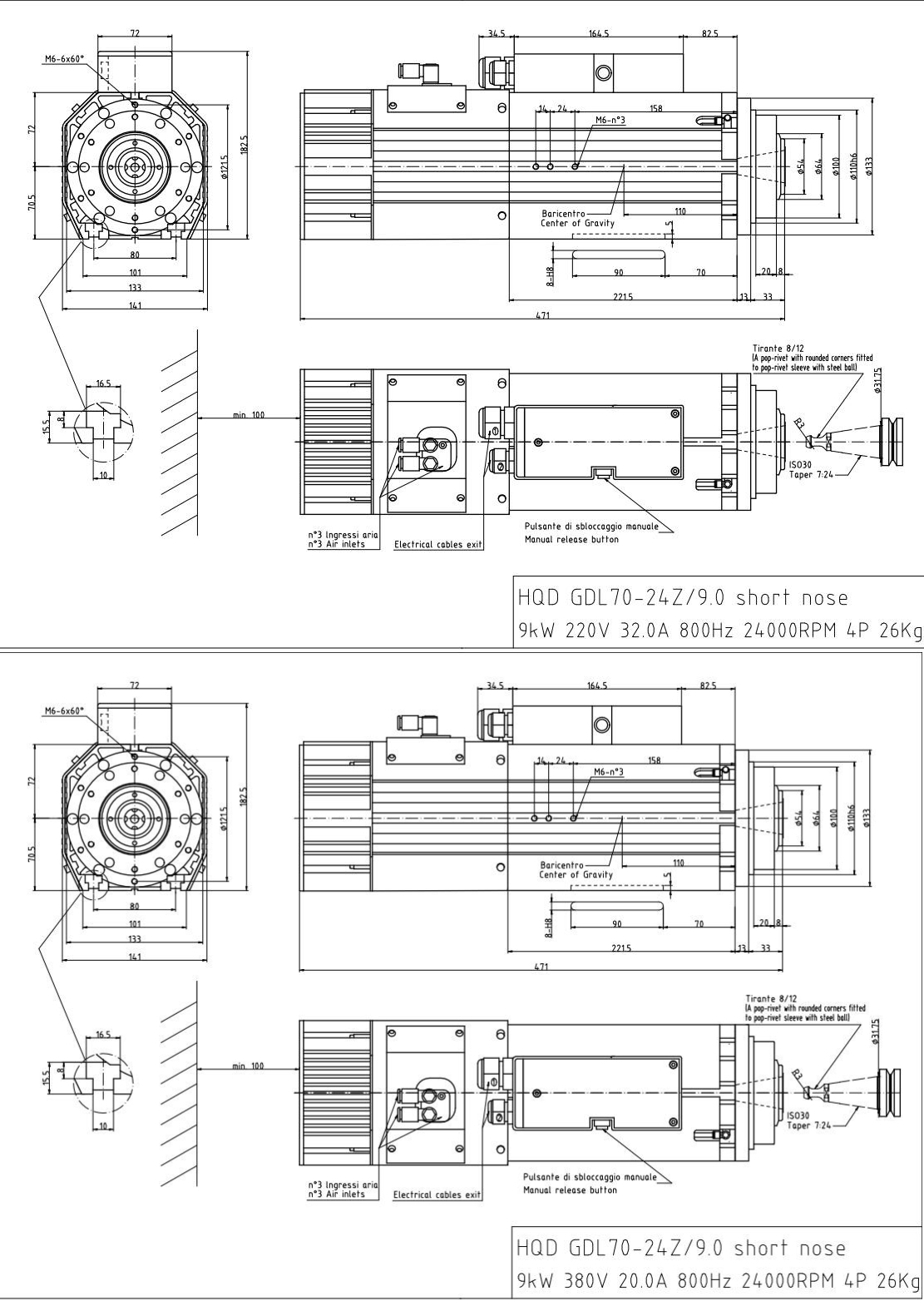
The short-nose configuration lists 471 mm overall length and 26 kg weight. Those facts help define the installation envelope and moving assembly, but the drawing is still needed to identify support surfaces, nose position and rear service locations. The model code does not establish a universal round clamping diameter. Compare the actual mounting arrangement with the machine rather than deriving the clamp from the “70” characters.

The long-nose version's listed overall length is 551 mm. The 80 mm difference between total lengths is useful for identifying the versions, but it does not independently establish one projection or a tool-tip shift. Read both sets of datums before changing the mount or magazine. Check rear connector access, the release assembly, hose and cable movement, and the holder's approach throughout the relevant machine travel.

Airflow in a compact installation

This spindle is air cooled. Its shorter listed assembly does not remove the need for cooling-air clearance in the mount or enclosure. Confirm the supplied-unit fan and connection requirements, and keep intake and exhaust paths clear. The TA20°C condition on the power curve must remain visible when assessing the actual operating environment; it should not be omitted merely because the spindle fits into the available space.

Describe any enclosure, dust extraction or connection cover around the spindle. Plan the airflow with the release-air and electrical services so the compact installation does not hide an unresolved cooling requirement. If replacing a water-cooled unit, the change in cooling method deserves its own review. If replacing another air-cooled unit, photographs and connection details still help establish whether fan wiring, airflow access and rear service layout can be retained.

INSTALLATION CHECKS

Match the whole assembly.

Use the drawing for this exact configuration to check mounting, clearances and connection locations.

  • Allow unobstructed cooling airflow and confirm any fan wiring.
  • Match the drive to the selected winding’s voltage and current.
Read the installation guide →
GDL70-24Z/9.0 ISO30 · Short nose dimensions and specifications drawing
Installation drawing · winding labels: 220 V / 32 A; 380 V / 20 A. Match the block or PDF for the winding you intend to order. View the drawing at full size. Choose the PDF labeled for your configuration below.

Evaluate the short nose for a specific machine layout

The short-nose version is a candidate when the machine's ISO30 tooling and mounting layout require this geometry. Link that mechanical choice to the actual working speeds and duty, then check drive output and airflow. A shorter assembly may address a space question, but it does not by itself establish holder clearance, tool-change compatibility or sufficient output for the intended process.

For a cutting application, include material, tool geometry, holder arrangement, working speed and load cycle. The product facts support a configuration comparison rather than a guaranteed feed rate or finish. Machine stiffness, tooling and cutting conditions still determine performance. If the process needs sustained power under a different duty description, resolve that requirement before deciding between the air-cooled short nose and the water-cooled S1 B version.

Identify the old nose version before comparing

Collect the current spindle's nameplate, complete model reference, mounting drawing and connection photographs. Establish whether it is short nose, long nose or the water-cooled B version. Compare mounting and nose references, the 471 mm assembly, holder retention, winding, drive, cooling and clamp/release signals. A shared GDL70-24Z/9.0 label can conceal the very geometry that matters to the replacement.

The long-nose comparison exposes a different overall assembly, while GDL70-24Z/9.0B changes cooling and duty as well as dimensions. GDL40.5 is an ISO20 comparison with a lower-output rated point and separately listed maximum speed. Read these rows as reasons to inspect another drawing, not accepted substitutions. For an older machine, request current availability and apply the full installation checklist to any proposed successor, including documents specific to the intended winding.

COMPARE RELATED SPINDLES

Compare the installation differences.

These models illustrate different interfaces and installation requirements. Check each drawing before choosing.

Swipe or scroll across to see all columns.

Use the left and right arrow keys to scroll this table.

ModelPower / dutySpeedInterfaceCoolingKey difference
GDL70-24Z/9.0 ISO30 · Short noseCurrent configuration9 kW at S6-60%, TA20°C24,000 rpm ratedISO30Air-cooledISO30 · Short nose · 471 mm overall
GDL70-24Z/9.0 ISO30 · Long nose9 kW at S6-60%, TA20°C24,000 rpm ratedISO30Air-cooledISO30 · Long nose · 551 mm overall

Compare the 551 mm long-nose assembly with this 471 mm short-nose version; the shared ISO30 code and S6 condition do not resolve mounting datums.

GDL70-24Z/9.0B9 kW at S1, TA20°C24,000 rpm ratedISO30Water-cooled483.5 mm overall

Compare the 483.5 mm water-cooled B assembly and its S1, TA20°C condition with this air-cooled S6-60% version.

GDL40.5-ISO20-24Z/2.22.2 kW rated18,000 rpm rated / 24,000 rpm maxISO20Air-cooled372.5 mm overall

Compare a lower-output air-cooled ISO20 ATC configuration with separate 18,000 rpm rated and 24,000 rpm maximum points.

Make the short-nose configuration explicit

Request GDL70-24Z/9.0, ISO30, short nose and the selected winding. Include quantity, destination country and postal code, required holders or accessories and additional technical documents. State the actual production cycle if its fit to S6-60% needs discussion. A request containing only “GDL70 9 kW” can leave the nose version, winding and duty context unresolved.

Compare quotation scope with the configuration in view. Check whether the proposed spindle is short nose, which electrical pair is included and which curve or connection documents are supplied. CINKR confirms the proposed supply and current availability by email. Retaining the agreed drawing and duty description with the quotation helps purchasing and installation work from the same configuration instead of exchanging files for different GDL70 versions.

  • Winding: 220 V / 32 A or 380 V / 20 A
  • Configuration: ISO30 · Short nose
  • Quantity, destination country and postal code
  • Required tooling, accessories and technical documents
Request a Quote

The listed PDF is the 220 V short-nose curve

The English PDF below is identified as the voltage, power and torque curve for the 220 V short-nose winding under S6-60%, TA20°C conditions. Read its applicability label before saving it. The 380 V winding is documented as a configuration choice, but this file should not be relabeled as its curve. Request the applicable additional document when needed for the selected supply.

Use the full-size installation drawing for the mounting and nose-datum review. Ask for any CAD, pneumatic or wiring information by exact nose version and winding, and confirm applicability before using it to finalize the machine. A shared base code on another file is insufficient. The curve describes operating information, while the outline and supplied-unit instructions support different parts of the installation and commissioning check.

DOWNLOADS

Files for this configuration.

PDF · 122 KB

Voltage, power and torque curves

GDL70-24Z/9.0 · 220 V winding · short nose · S6-60%, TA 20°C

English

Download PDF

For CAD or additional installation drawings, include the exact model and configuration in your inquiry.

MODEL QUESTIONS

Questions about GDL70-24Z/9.0

What identifies the short-nose version?

Specify GDL70-24Z/9.0 with “ISO30 · Short nose.” This version has a 471 mm overall assembly and weighs 26 kg. The long-nose version has different assembly dimensions and requires its own drawing review.

Is the 9 kW value unconditional?

No. It is documented at 24,000 rpm under S6-60%, TA20°C conditions. Continuous S1 output is not established for this air-cooled configuration.

Does the download cover the 380 V winding?

The listed short-nose curve PDF is labeled for 220 V. The documented winding choices include 220 V / 32 A and 380 V / 20 A; request the appropriate additional curve if needed for 380 V.

Can I infer an 80 mm tool-tip change from the two versions?

The listed overall lengths differ by 80 mm, but tool-tip position also depends on drawing datums, mounting position and holder/tool projection. Check those before changing the magazine.

Is the B version simply another nose length?

GDL70-24Z/9.0B is water cooled, has a 483.5 mm assembly and documents S1 at TA20°C. Its cooling, duty and installation requirements need a separate comparison.

What belongs in the quotation request?

Include short nose, ISO30, selected winding, quantity, destination and intended duty. For replacement, add the old nameplate, mount drawing and photos of rear connections and tooling.

REQUEST A QUOTE

Request a quote for GDL70-24Z/9.0

Include the winding, quantity and installation details for this configuration. Unknown technical details can be left blank.

Useful details to have ready
  • Exact code and readable nameplate
  • Mounting dimensions and available clearance
  • Tool interface and required speed
  • Drive output, cooling and ATC connections

Attach photographs or drawings in your email application.

Machine and technical details (optional)
Review your inquiry
Include your spindle model, machine requirements and questions in your email.
Open email

Open your email application to review and send the inquiry, or copy the text into a message to info@cinkr.com. Quotes and availability are confirmed by email.

Open original image

Zoom to read details. Scroll horizontally or vertically to move around the image.

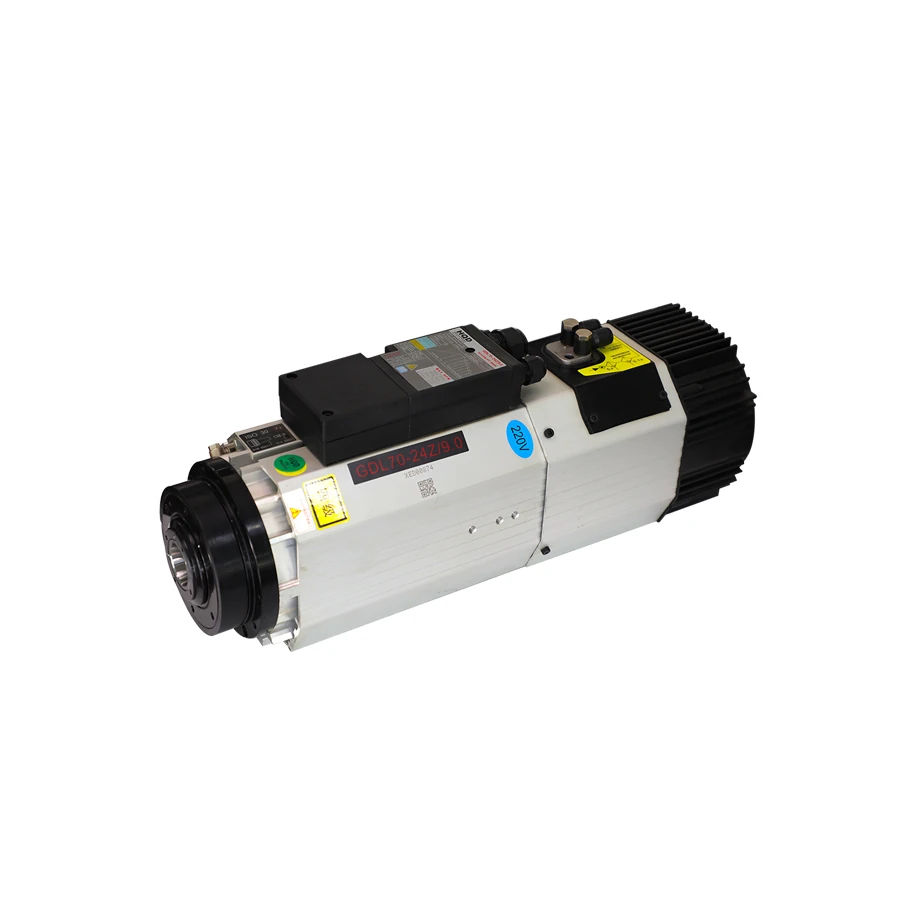
GDL70-24Z/9.0 ISO30 · Short nose product photo
Open original image

Zoom to read details. Scroll horizontally or vertically to move around the image.

GDL70-24Z/9.0 ISO30 · Short nose installation drawing