Key Requirements and Configuration Checks
- The ER number names a family, not the hole diameter.
- Select individual collets for the actual tool shanks.
- Check nut, nose and installation requirements separately.
Match the proposed configuration to its applicable drawing, operating data and machine requirements. Resolve mounting dimensions, auxiliary services and operating limits before accepting a spindle for the intended installation.
| Interface | HQD example | Tooling question |
|---|---|---|
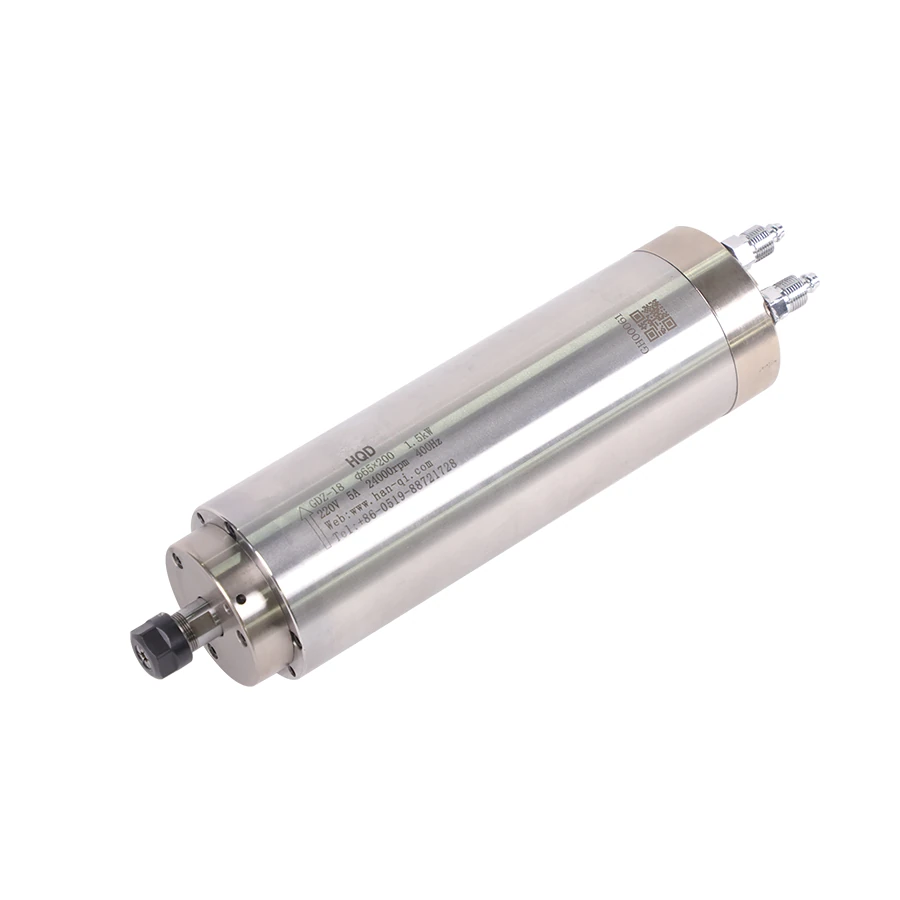
| ER11 | GDZ-18 | Does the small-shank inventory fit? |
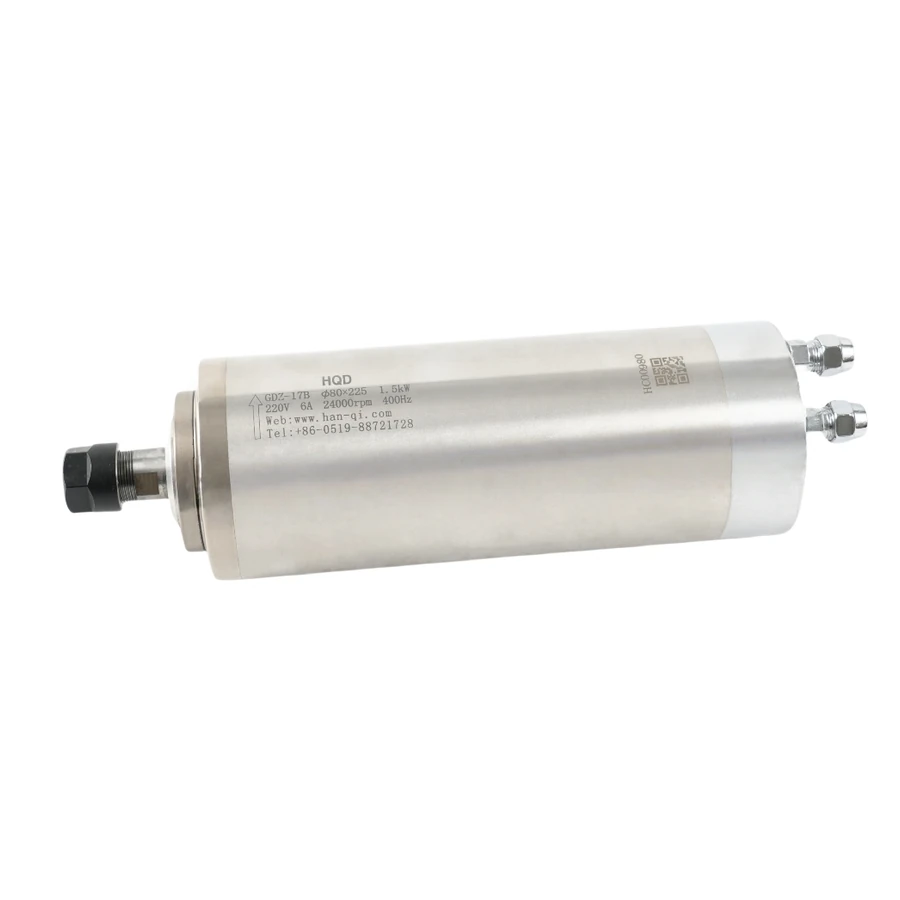
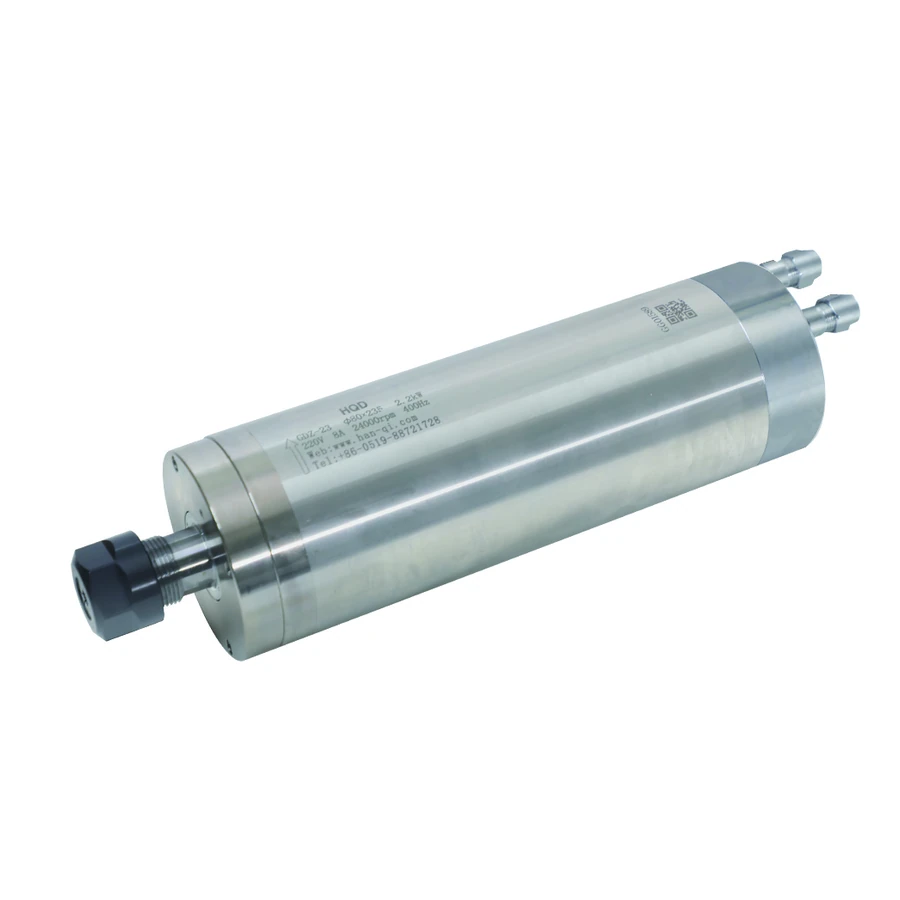
| ER16 / ER20 | GDZ-17B / GDZ-23 | Which shanks and mounting arrangement are needed? |
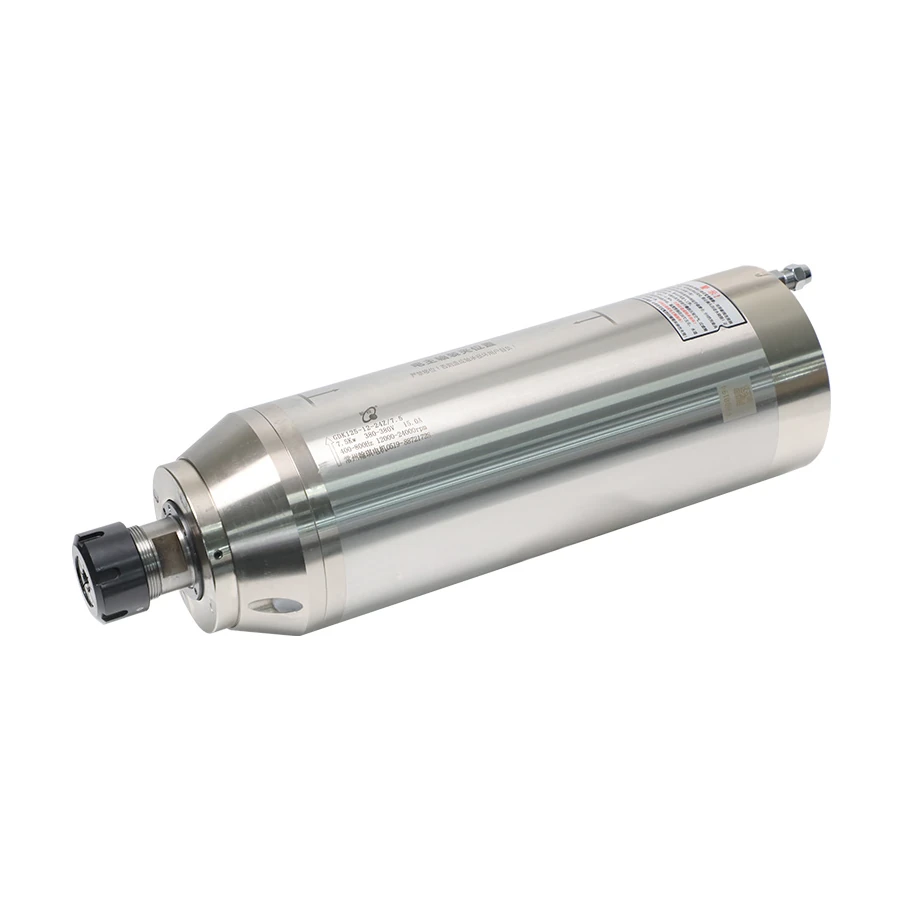
| ER25 / ER32 | GDK110 / GDK125 | Does the larger tooling match the whole machine? |
Identify the four different sizes
An ER11, ER16, ER20, ER25 or ER32 designation describes a collet family. Within that family, individual collets hold particular shank sizes or documented clamping ranges. The family number is not the diameter of the hole and is not a cutter diameter limit. When a purchase request says only ER20, it still needs the actual tool shanks, collets and nut configuration.
Separate four measurements in your notes: collet family, individual collet size, tool shank diameter and cutting-edge diameter. A profiling cutter may have a cutting head wider than its shank; an end mill may have a reduced neck; a toolholder may carry an ER collet inside an ATC taper. These arrangements answer different questions. Check the cutter's speed, projection and load limits separately from whether its shank physically fits.
The outer collet dimensions also differ between families, so an ER16 collet does not become an ER20 collet by selecting the same bore size. Keep each collet with the correct nut and chuck. For existing equipment, photograph the nose, nut markings and a removed collet. If the identifying information is incomplete, compare dimensions with the tooling supplier before purchasing replacement parts.
Read the size chart as a tooling reference
The following ranges refer to standard metric collet families listed in the Techniks reference, not a list of collets included with an HQD spindle. Special sealed, tapping, precision or extended-range products can have different requirements. The exact individual collet documentation controls the allowable shank range. Confirm what will be supplied with the spindle rather than assuming that an entire set is included.
| Family | Referenced metric family range | Typical collet length | Typical maximum outside diameter | HQD example |
|---|---|---|---|---|
| ER11 | 0.5–7 mm | 18 mm | 11.5 mm | GDZ-18 |
| ER16 | 0.5–10 mm | 27.5 mm | 17 mm | GDZ-17B |
| ER20 | 1–13 mm | 31.5 mm | 21 mm | GDZ-23 |
| ER25 | 1–16 mm | 34 mm | 26 mm | GDK110-9-18Z/2.2-4.4 |
| ER32 | 2–20 mm | 40 mm | 33 mm | GDK125-12-24Z/7.5 |
A family range is useful for filtering tooling systems, but it should not be used as an instruction to clamp a small tool in any larger collet. Check the lower and upper limits of the particular collet. Where a cutter requires a precise inch shank, use the specified inch collet rather than treating the closest round metric value as interchangeable.
ER11 for a small-shank inventory
ER11 is a useful starting point when the recurring tool inventory sits within its documented shank range. The selection still needs the actual cutter sizes, neck lengths and permitted speeds. A machine doing detailed work with small tools may have no reason to move to a larger family solely because a larger spindle is available. Check whether tooling access, holder clearance and process needs are already satisfied.
HQD GDZ-18 provides an ER11 example rated at 1.5 kW and 24,000 rpm, with a 65 mm body. It demonstrates that ER11 is not restricted to one power class. GDZ-18-2, by contrast, is recorded as ER11B. Keep that suffix visible and verify the appropriate collet and nut; do not silently replace it with the ordinary ER11 description because the names look similar.
For an ER11 quotation, list the recurring shanks and the smallest tool that matters to the job. Include replacement collets as separate requested items. Ask for the supplied nut arrangement and tightening procedure. This makes the order a usable tooling package rather than a spindle that arrives with a collet unsuitable for the cutters already in the shop.
ER16 when the required shanks exceed the smaller system
ER16 extends the referenced metric family range to 10 mm. Its value is the extra tooling choice, not a blanket increase in machining quality. If all production tools fit ER11 and the present holder is suitable, the wider range may not improve the process. If the tool inventory includes a required shank outside the smaller range, ER16 becomes a concrete selection condition.
GDZ-17B is an ER16, 1.5 kW, 24,000 rpm example with an 80 mm body. Compare it with GDZ-18 to see the installation implications of changing tooling at equal power. GDZ-18B also uses ER16 but has a 65 mm body. Those distinctions are why the quotation should include the full code instead of the phrase 1.5 kW ER16 spindle.
A 3/8-inch shank measures 9.525 mm. Its nominal diameter sits below 10 mm, but the order should still identify a suitable inch collet and the particular cutter. Do not round it to a 10 mm tool. Check projection and nut clearance, especially where fixtures or a dust shoe sit close to the spindle nose.
ER20 for a wider recurring tool range
ER20's referenced metric range reaches 13 mm, which brings more shank sizes into the comparison. That can be important for a shop standardizing around 1/2-inch shanks, provided the cutter and machine requirements also fit. The 12.7 mm diameter of a 1/2-inch shank is different from both 12 mm and 13 mm. Specify the actual shank and individual collet rather than ordering from a rounded conversion.
GDZ-23 is a 2.2 kW, ER20, 80 mm water-cooled example. For air-cooled options, GDF80-24Z/2.2 and GDF80-24Z/2.2B have the same rated power but use ER16 and ER20 respectively. That is a practical case where the suffix changes the tooling comparison. An otherwise familiar model code is not enough to establish that existing collets and nuts can be reused.
A larger collet family does not remove the cutter's operating limits. A wide cutting head can impose requirements for speed, projection, clearance and machine stiffness even when its shank fits ER20. Keep the tool manufacturer's maximum speed and assembly instructions with the job record. For each panel profile, groove or finishing operation, identify the cutter, actual shank, required projection and holder envelope, then check the intended feed and workholding. This connects the tooling package to the recurring production task before the spindle configuration is selected.
ER25 when the job needs the next shank range
ER25 has a referenced metric range reaching 16 mm. Before moving to it, identify which specific recurring tool needs the additional shank capacity. If the intention is only to improve a vibrating cut, first inspect tool projection, collet condition, spindle runout and workholding. A larger family cannot diagnose the cause, and it may require a different spindle installation.
GDK110-9-18Z/2.2-4.4 provides an ER25 example with a 110 mm body, 352.5 mm overall length and a documented 9,000–18,000 rpm range. Its 2.2 kW rated output illustrates that an ER25 interface is not automatically associated with a higher continuous power rating than every ER20 model. Read the operating curve and duty conditions separately.
A 5/8-inch shank is 15.875 mm. Select its correct collet and inspect the complete tool envelope, including cutting head, neck and projection. For an existing machine, compare the new spindle mass, clamp area and nose location before focusing on the larger tool alone. That mechanical review is part of the purchase, not a later accessory decision.
ER32 for larger tooling and a complete machine check
ER32 reaches 20 mm in the referenced standard metric range. Its physical size and tooling options make the holder envelope and machine support especially important in the comparison. Specify the actual cutter and shank, rather than requesting the largest available collet as a general upgrade. Clearance around the nut and nearby workholding must remain available throughout the toolpath.
GDK125-12-24Z/7.5 uses ER32 and is documented with a 125 mm body, 404.5 mm overall length, 190 mm clamp length and 30 kg mass. Those values make it a different installation question from the compact GDZ examples. Its 12,000–24,000 rpm range must also suit the intended cutters and the selected drive. A tooling match alone cannot settle that choice.
For a production machine, build the check around its allowed assembly mass, clamp arrangement, tool clearance and operating point. Include any air-seal or coolant connection requirements shown for the exact spindle. If a cutter would need an adapter or extension, verify the complete assembly's permitted speed and use conditions. Do not assume that an adapter preserves every capability of the original tool system.
Keep metric and inch tools distinct
Use exact conversions when making the inventory, then order collets identified for those shanks. Conversion is a measurement aid, not an instruction to substitute one collet for another. The following common values help reveal where a rounded description can cause a wrong order.
| Inch shank | Exact metric equivalent | Procurement description |
|---|---|---|
| 1/8 inch | 3.175 mm | Request the correct 1/8-inch collet |
| 1/4 inch | 6.35 mm | Do not describe it as a 6 mm shank |
| 3/8 inch | 9.525 mm | Keep 3/8 inch on the tooling order |
| 1/2 inch | 12.7 mm | Keep 1/2 inch separate from 12 or 13 mm |
| 5/8 inch | 15.875 mm | Check the selected ER25 or larger tooling product |
| 3/4 inch | 19.05 mm | Verify the specific ER32 tooling arrangement |
Record the actual tools used, including specialist sealed or tapping collets where applicable. A replacement sourced by family and nominal bore can still differ in collapse range or intended use. Keep the tooling supplier's part identification with the machine record so the next replacement does not start from an uncertain photograph.
Check assembly and condition before blaming the size
A tool can fit the collet and still be held incorrectly. Follow the tooling supplier's sequence for seating the collet in its matched nut, inserting the tool shank and tightening the assembly. Use the torque specified for the actual nut, collet and holder combination; a value intended for another family or nut design may be unsuitable. Keep the taper, nut and collet clean, inspect their contact surfaces for damage, and replace components that fail the supplier's inspection criteria before returning the assembly to service.
If the finish or tool life changes after a replacement, compare the old and new tool projection, collet type, assembly condition and measured runout using an appropriate inspection method. Repeat measurements under consistent conditions. A published precision figure for a collet does not establish the runout of the entire spindle, holder and cutter assembly. Ask the machine or tooling supplier to evaluate values outside the process requirement.
Keep the engaged length of the tool shank within the tooling supplier's instructions. Do not create fixture clearance by pulling the cutter farther out without checking its permitted assembly conditions. If additional reach is necessary, select and validate a suitable tool or holder arrangement. For aluminum sheet and extrusions, review projection together with the unsupported span, clamping position and access to the feature. A longer cutter and a poorly supported wall can both contribute to a changing finish, so record both conditions before attributing the result to spindle power or collet size.
Translate an actual tool list into collet quantities
Consider an inventory with four recurring shanks: 3 mm, 6 mm, 8 mm and 1/4 inch. First separate the metric and inch entries. Then record the number of tools normally kept assembled and the number changed manually. An ER16 family may accommodate those shank sizes with suitable individual collets, but the order still needs the correct collets, nut and spindle or holder specification. Family capacity does not identify the contents of a supplied kit.
If two cutters share a shank diameter, they can share a suitable individual collet when used one at a time in a manual spindle. That does not mean they share the same permissible speed, projection or cutting conditions. Keep the cutter part numbers with the inventory. With ATC, several cutters may remain assembled in separate holders, so count complete holder assemblies and rack positions as well as collets.
Before ordering replacements, photograph markings on the current collet and nut and measure according to the tooling supplier's identification method. A damaged or unreadable part should not be identified solely by how it appears next to a ruler. Ask the supplier to confirm the compatible family and nut arrangement, particularly where the HQD spindle uses a distinct designation such as ER11B.
Complete the order with spare requirements and the supplied documentation. State which tools are supplied by the buyer and which assemblies the supplier should provide. This inventory approach supports ER11 through ER32 equally: first establish shank requirements, then the compatible assembly and operating limits. It avoids purchasing a large family for one future cutter while overlooking the collets needed for the tools already used every day.
Turn the inventory into a tooling order
Use one line per recurring tool shank. This lets you distinguish required collets from optional future tooling, and separates a spindle interface change from a cutter purchase. Record which parts can be positively identified and which require inspection.
| Tool or operation | Actual shank | Collet family and individual size | Nut or holder identification | Clearance or speed condition |
|---|---|---|---|---|
| Current production cutter | Fill from tool specification | Record exact part | Record markings or drawing | Record projection and permitted speed |
| New required cutter | Specify metric or inch | Verify clamping range | Verify matched assembly | Check workholding and machine envelope |
| Replacement collet | Match existing tool | Keep supplier identification | Inspect nut and nose | Use prescribed assembly procedure |
Include the tool inventory, complete spindle code and applicable installation drawing in the tooling request. For ATC equipment, identify the external taper, holder dimensions and retention arrangement as well as the ER collet inside the holder. An ISO30 holder carrying an ER collet remains an ISO30 assembly at the spindle interface. Check its flange and retention geometry against the spindle, its handling features against the rack, and its permitted speed against the intended operation. State which holders and collets will be retained and which complete assemblies need to be supplied.